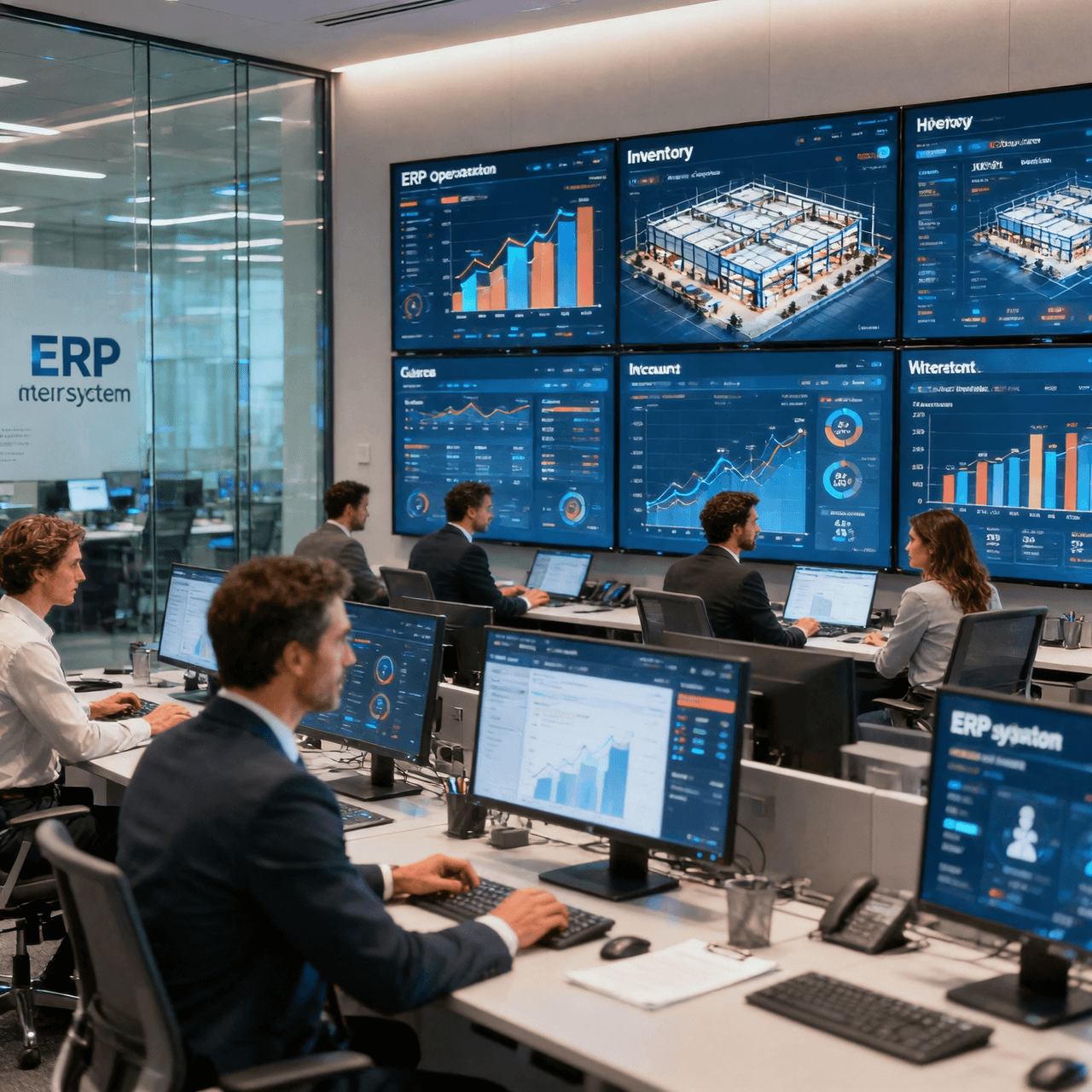
ERP implementation often begins as a system transformation project. Internal teams work alongside vendors or consultants to define requirements, configure modules, and prepare data migration processes.
When the system starts being used by various divisions, the project is often considered complete.
This approach is quite common in enterprise technology projects. However, ERP does not function like a business application that is simply installed and then used without changes.
The role of ERP is much broader and simplifies complex processes into much more concise ones. This is because the ERP system has become part of the company's business processes itself.
ERP Regulates Operational Workflow
Once ERP is fully deployed, it is typically connected to various operational activities of the company.
Every sales transaction, inventory management, through to procurement processes can be recorded in the same platform. Approval workflows, financial reports, and data movement between divisions also run through the system.
Because of this, ERP does not only function as a data recording system, but also helps shape the way companies run their operations.
Challenges When ERP Is Viewed as a Temporary Project
When ERP is treated merely as an implementation project, companies risk facing various obstacles after the system is up and running.
The system may already be used by internal teams, but adjustment to business changes does not always go well. Business processes evolve, while the system in use does not undergo sufficient updates.
Under these conditions, companies can face situations where the ERP runs without ongoing support. Where systems originally designed to increase efficiency actually become difficult to adapt to evolving operational needs.
This situation shows that ERP cannot be managed with a short-term project approach.
ERP Requires Long-Term Accompaniment
If ERP is positioned as the company's operational system, then its management also requires a long-term approach.
Companies typically need partners who not only assist during the initial implementation phase, but are also capable of accompanying the system development process as operations change.
This role is very critical, making it extremely important to have a strategic partner in managing the ERP system.
This type of accompaniment ensures that the ERP remains relevant to business needs, both in terms of workflows, system integration, and the development of additional features.
From Implementation to an Enablement Approach
As companies grow, the need for ERP systems increases. Many companies are beginning to shift their perspective on ERP implementation.
ERP is no longer positioned as a system installation project, but as an operational platform that needs to be continuously adapted to business developments.
This approach is known as ERP enablement, which ensures that the ERP system can grow alongside the company's operations.
Closing
ERP plays a much larger role than just being a technology system within a company. Once ERP becomes part of daily business activities, the system essentially functions as the foundation of the company's operations.
Thus, understanding ERP as an enterprise operational system is essential to help companies grow and sustain in the long run.
If you want to understand further how the ERP Enablement-as-a-Service approach works in your company, TiLabs is open for further discussion. Book a free demo now.
An initial discussion can be held directly via WhatsApp to explore the system requirements and the most relevant ERP strategy for your company.


Ready to Fix Your ERP Problems?
Our EaaS model is flexible and grows with your business. It is fast, secure, and always supported.