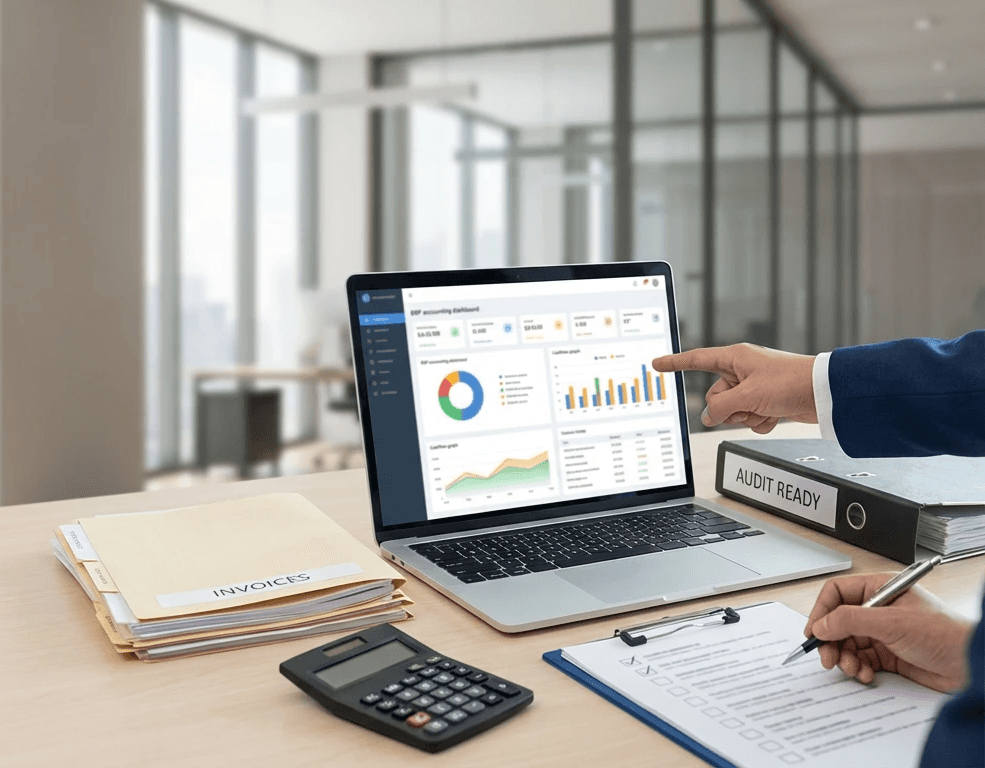
Odoo accounting is increasingly being used by companies that want to build a neat, consistent, and easily traceable financial recording system. In daily business practices, the main challenge in the finance division is not just recording transactions, but ensuring that all financial data is properly structured and accountable.
Such an integrated approach helps management understand financial conditions without relying on error-prone manual reports.
With a clear recording structure, every transaction within the company has a complete context, from the source, the time of recording, to its impact on financial statements. This is crucial for companies that want to maintain internal and external trust, especially when review or audit processes are conducted.
Odoo Accounting and Data-Driven Financial Analysis Patterns
The main advantage of Odoo accounting lies in its ability to consolidate financial data into a single, easily analyzed system.
Every journal, invoice, and payment is stored systematically, allowing the finance team to perform data searches quickly and accurately. From an experience standpoint, a system like this helps reduce reliance on time-consuming manual reconciliations.
More than just recording, the collected data can be used to read company financial trends. Management can view cash flow, accounts receivable positions, and operational expenses more comprehensively. This kind of analysis ensures that financial decisions are no longer reactive but based on real and measurable information.
Furthermore, the consistency of the data structure facilitates collaboration between the finance team, management, and external parties. Information presented in a uniform format helps minimize miscommunication and enhances the quality of strategic discussions.
In Corporate Governance Practice
In the context of governance, Odoo accounting acts as a bridge between policy and implementation in the field. This system ensures that recording, approval, and reporting procedures run according to the established workflow.
Thus, internal controls can be applied without hindering operational activities. This approach is also relevant for growing companies.
As transaction volumes increase, the system's structure remains capable of maintaining data order. Many companies view this practice as part of efforts to build long-term trust in their financial reports.
Proper implementations like this are often discussed in how accounting systems can support comprehensive business management.
Ultimately, Odoo accounting is not just a tool for recording numbers but a foundation for building a transparent and relevant financial understanding for strategic corporate decision-making.


Ready to Fix Your ERP Problems?
Our EaaS model is flexible and grows with your business. It is fast, secure, and always supported.