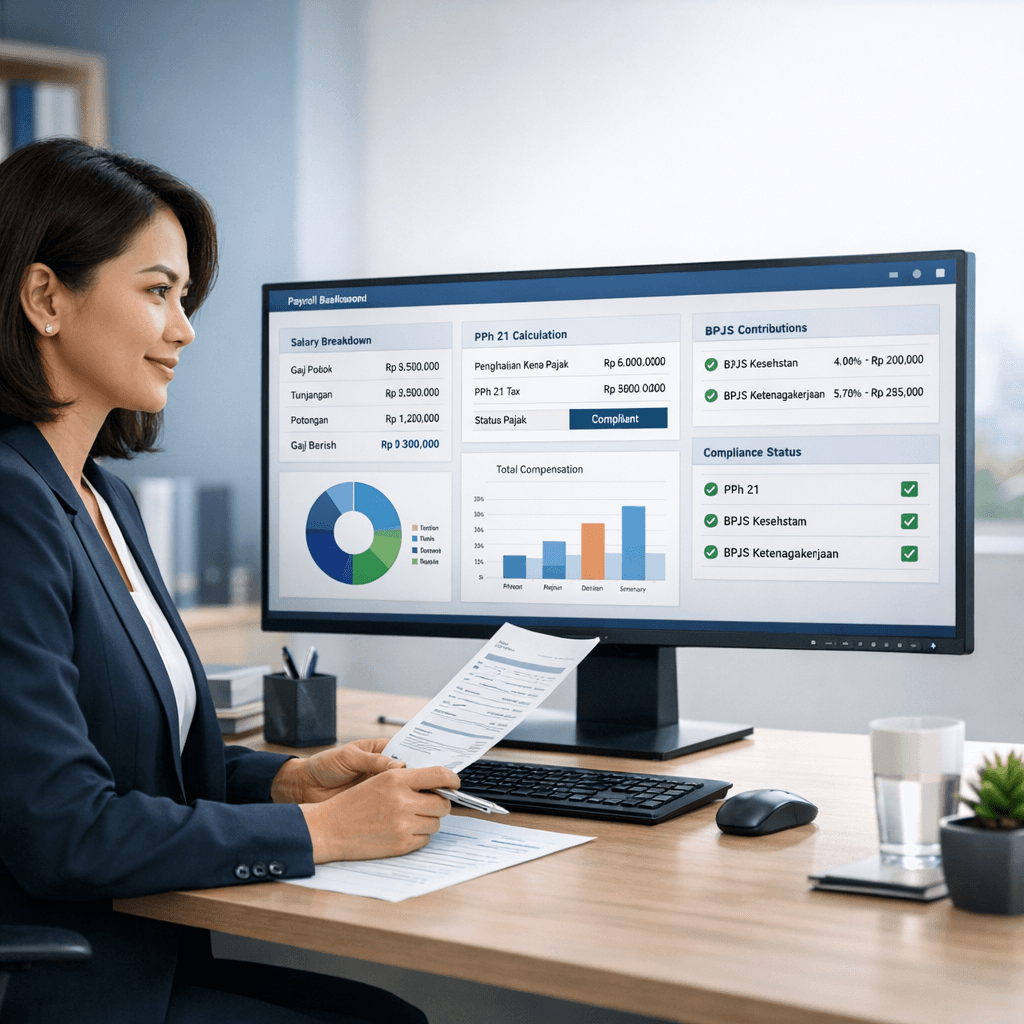
Managing employee salary payroll is not just about calculating numbers at the end of every month. Behind employee payslips, there are legal, taxation, benefits, BPJS, and audit risk components that, if slightly incorrect, can have a major impact on the company.
For HR teams in both growing and large corporations, payroll is a combination of precision, regulatory compliance, and execution speed. This article will comprehensively discuss how payroll should be managed to be safe, efficient, and scalable.
What Is Employee Salary Payroll?
Employee salary payroll is the administrative process of calculating and paying compensation to employees which includes:
Basic salary
Fixed & variable allowances
Overtime
Bonuses or incentives
Deductions (PPh 21, BPJS, loans, etc.)
Take home pay
Payroll is not just about transferring salaries. It also includes documentation, tax reporting, and compliance with the Labor Law.
Important Components in Employee Salary Payroll
In order for the payroll process to run optimally, HR teams need to ensure at least the following components are managed correctly:
1. Salary Structure
The salary structure must comply with regulations and internal company policies. This includes separating fixed and variable components.
2. PPh 21 Calculation
Errors in calculating employee income tax can lead to administrative sanction risks. Calculations must follow progressive rate rules and the latest PTKP status.
3. BPJS Kesehatan & Ketenagakerjaan
Company and employee contributions must match the percentage set by the government.
4. Overtime and Attendance
An attendance system integrated with payroll greatly helps HR team operations. Non-integrated attendance systems are often a source of payroll errors.
5. Documentation & Reporting
Payroll must be well-documented for both internal and external audit purposes.
Employee Salary Payroll Challenges in Companies
Many HR teams face the following challenges:
Manual calculations based on spreadsheets
Out-of-sync attendance data
Tax regulation changes
Risk of human error
Tight tax reporting deadlines
The larger the number of employees, the greater the complexity of its management.
Risks If Payroll Is Not Managed Well
Errors in employee salary payroll can impact:
Tax fines and administrative sanctions
Employee dissatisfaction
Decline in company reputation
Repetitive HR workload
Potential problematic audits
Untidy payroll is not only an administrative issue, but also a matter of reputation and compliance.
Why Is Automated Payroll More Efficient?
An automated payroll system with PPh 21 greatly helps HR in:
Reducing calculation errors
Integrating attendance and overtime
Calculating PPh 21 automatically
Generating instant payslips
Providing structured tax reports
Storing data history securely
With automation, HR teams can shift from administrative tasks to strategic functions like talent development and workforce planning.
Best Practices in Managing Employee Salary Payroll
To ensure payroll runs optimally:
Use an integrated payroll system
Conduct regular internal audits
Update tax and labor regulations routinely
Document all compensation policies
Ensure employee data is always updated
A systematic and technology-based approach will reduce long-term risks.
Conclusion
Managing employee salary payroll requires more than just the ability to calculate numbers. It requires accuracy, an understanding of regulations, and a system capable of minimizing the risk of errors.
For companies wanting to maintain operational stability and reputation, investing in the right payroll system is no longer an option, absenly is here to help HR teams whose time is otherwise consumed by administration.
If your HR team still relies on manual processes, now is the right time to evaluate your system. Contact us immediately.


Ready to Fix Your ERP Problems?
Our EaaS model is flexible and grows with your business. It is fast, secure, and always supported.