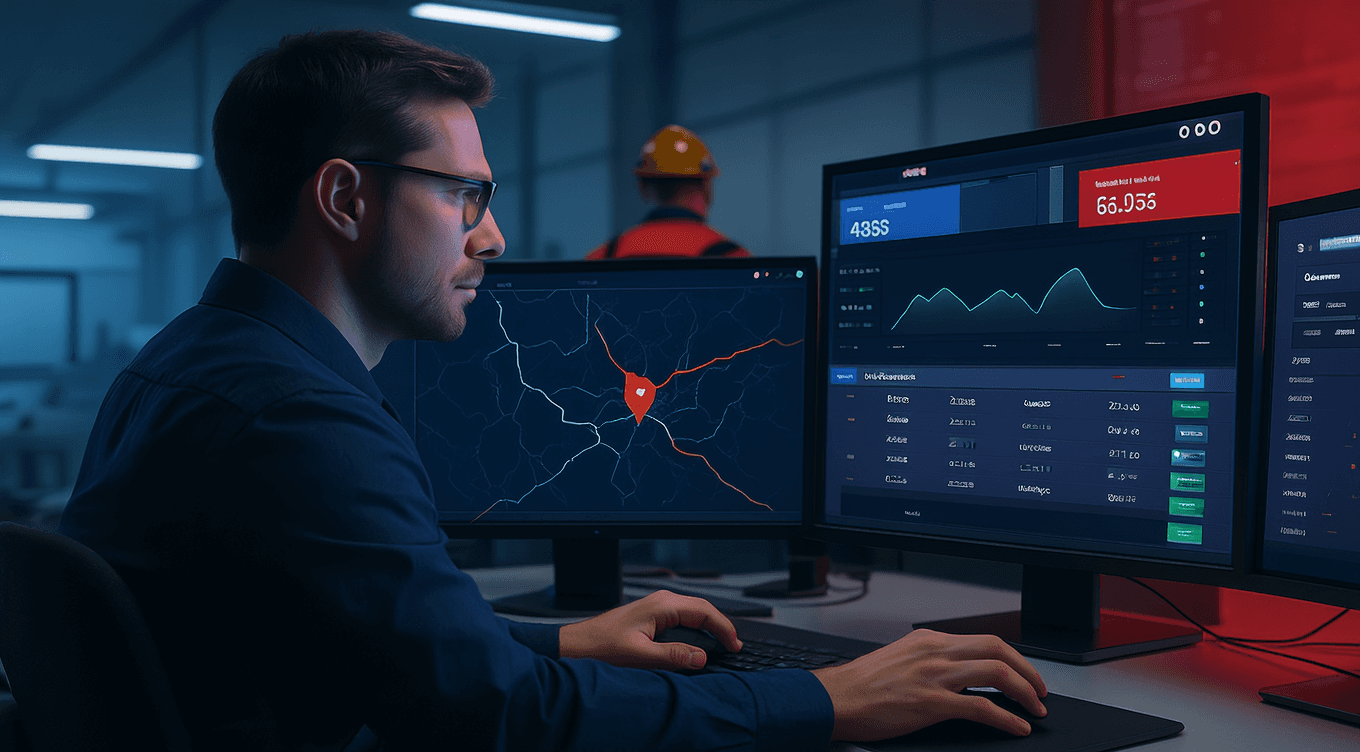
Errors in managing daily worker payroll almost frequently occur. The payroll process still runs, salaries are still paid, and operations seem normal. However, behind it all, discrepancies in salary calculations, unsynchronized attendance data, to untracked field activity records accumulate over time, turning into a much larger risk.
The issue is only truly felt when complaints arise simultaneously. Such as tax reports starting to become inconsistent or HR struggling to explain the basis of salary calculations in each branch.
At this stage, the issue is no longer administrative, but has already touched operational control.
This complexity is common in companies with thousands of daily workers. Especially with multi-location operations. Variations in working hours, different wage schemes, and the lack of visibility into each employee's work progress make payroll difficult to manage. Not to mention if it only relies on manual processes.
Variations in working hours and differences in wage schemes make the salary calculation process highly prone to errors.
The problem is not just with the tools used, but with the foundation of the business process.
When attendance and payroll components are not connected in a clear workflow, the HR team will continue to be trapped in manual reconciliation work that drains time and energy.
Why is Daily Worker Payroll the Most Complex?
Unlike permanent employees, daily worker schemes contain many variables. Such as location-based attendance, sales targets, flexible overtime, to different rules in each branch.
Without a system that truly reflects clarity and professionalism, payroll can easily look neat on the surface but harbor major risks behind the scenes.
The Needed Approach
Because of this, the required approach is not just an app installation, but a comprehensive enablement. Starting from needs analysis, mapping HR and finance workflows, to implementing a system capable of automatically connecting attendance data, field activities, and tax calculations.
Such a structured approach is usually part of business progress. It is also needed at the level of operational readiness. So it's not just about using software.
The impact is directly felt: the HR administrative burden decreases and the risk of PPh21 errors is better controlled. Additionally, management gains real-time visibility into the performance of field forces across all branches.
This is the difference between simply running payroll and truly controlling its system.
Companies that build a proper payroll foundation from the start are more ready to scale. As the number of daily workers grows, the process remains stable because the system is designed based on control and compliance standards.
You can take the first step starting with a free consultation session

Ready to Fix Your ERP Problems?
Our EaaS model is flexible and grows with your business. It is fast, secure, and always supported.